
Cash Flow Statement: A Working Playbook for SaaS Founders
A cash flow statement shows real cash movements, not accounting profit. Covers direct vs. indirect methods, SaaS deferred revenue, FCF ratios, and red flags.
Updated 16 min read
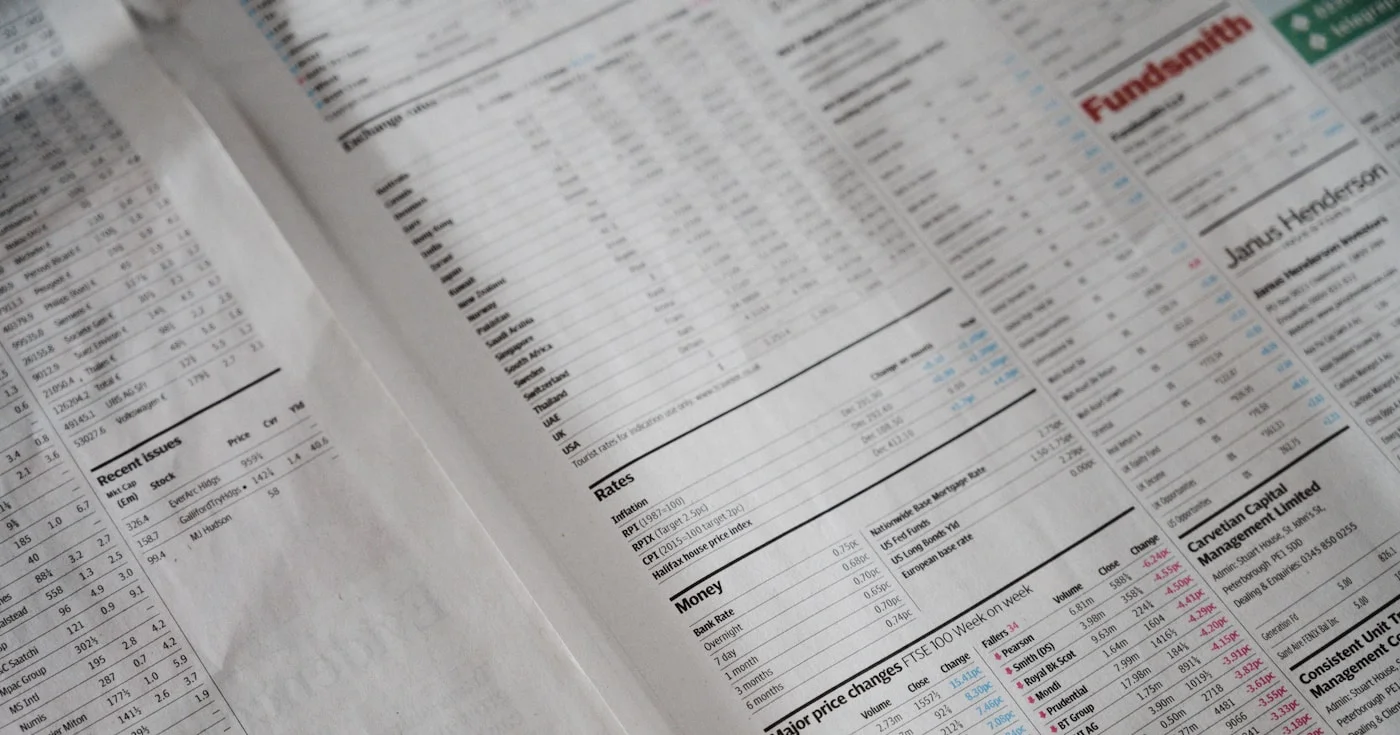

A cash flow statement shows real cash movements, not accounting profit. Covers direct vs. indirect methods, SaaS deferred revenue, FCF ratios, and red flags.
A cash flow statement shows exactly how much real cash a business generated or spent during a reporting period, broken into operating, investing, and financing activities. Unlike the income statement, which runs on accrual accounting, the cash flow statement captures actual cash movements. Per SEC.gov, it traces the path from beginning cash balance through every inflow and outflow to the ending balance, which must match the cash line on the balance sheet.
82% of small businesses that fail cite cash flow problems as a root cause, according to SCORE. And yet fewer than one-third of small businesses take proactive steps to prevent disruptions. This guide covers every section, both reporting methods, how to spot red flags early, and the SaaS-specific mechanics around deferred revenue and burn rate that make the standard frameworks insufficient on their own.
This guide covers everything you need to know about the cash flow statement, from foundational structure and reporting methods to advanced analysis and SaaS-specific patterns.
A cash flow statement is one of the three primary financial statements, alongside the income statement and the balance sheet. It reports every cash inflow and outflow during a specific period, whether monthly, quarterly, or annually.
The core distinction from the income statement: accrual accounting records revenues and expenses when earned or incurred, not when cash changes hands. The cash flow statement corrects for that timing gap. A business can post a profitable income statement while simultaneously burning through cash, which is the exact failure mode the cash flow statement is designed to surface. This is the difference between economic activity (income statement) and liquidity (cash flow statement).
Every cash flow statement follows the same core formula:
Beginning cash balance + Cash from operating activities + Cash from investing activities + Cash from financing activities = Ending cash balance
88% of small businesses reported cash flow disruptions in the past year. Despite this, the problem is nearly universal and largely preventable. The U.S. Chamber of Commerce found that fewer than one-third take proactive steps to address it.
The downstream consequences are severe: 39% of small businesses don't have enough cash to cover a single month of expenses, and 29% of startups fail specifically because they run out of cash. A company can look profitable in the income statement and be weeks away from insolvency in the cash flow statement. Reading the latter regularly is the difference between catching the problem in Q1 and discovering it in Q4.
Operating activities show the cash your core business generates or consumes in day-to-day operations. This includes cash received from customers, payments to suppliers and employees, taxes paid, and interest.
For SaaS companies, operating cash flow covers subscription revenue collected, payroll, cloud infrastructure costs, and sales and marketing spend. The benchmark signal: operating cash flow should generally exceed net income over time. Per HBS Online, when it does, the business is generating real cash rather than accounting profits. When it doesn't, investigate the gap before it widens.
Investing activities capture cash used to buy or received from selling long-term assets and investments: property, equipment, patents, and marketable securities. This section also reveals whether a company is reinvesting in future operations or selling assets to cover operating shortfalls.
For SaaS founders, the most common investing cash outflows are capitalized software development costs and infrastructure purchases (servers, hardware). Consistently negative investing cash flow is often a healthy signal in growing companies. Positive investing cash flow in a struggling company usually means asset sales, a critical red flag.
Financing activities track cash from transactions with investors and lenders: loans taken out, debt repaid, equity issued, dividends paid, and stock repurchases. This section shows how the company funds itself when operating cash flow alone is insufficient.
A growing startup with negative operating cash flow and strongly positive financing cash flow (from a venture round) is often a healthy picture. A mature company with positive operating cash flow that still draws heavily on external financing warrants a closer look at the return on that capital.
Below the three main sections, most statements include a supplemental schedule of significant noncash transactions. Per SEC.gov, this covers meaningful transactions where cash didn't directly change hands, such as assets purchased with loan proceeds or like-kind exchanges. Skip this section when preparing your own statement and you'll produce an incomplete picture.
The choice of reporting method only affects how the operating activities section is presented. Investing and financing sections are identical under both methods.
Feature | Direct Method | Indirect Method |
|---|---|---|
Starting point | Actual cash receipts and payments | Net income |
Approach | Lists each cash inflow and outflow explicitly | Adjusts net income for non-cash items and working capital changes |
Transparency | High: shows raw cash transactions | Lower: requires interpretation |
Prevalence | Rare: fewer companies, generally smaller ones | Dominant: used by most companies |
Best for | Investors, banks, prospective buyers | Internal reporting, accrual-based businesses |
GAAP/IFRS | Both allowed | GAAP preference for direct; indirect dominates in practice |
Source: SEC.gov
The indirect method starts with net income from the income statement, then adjusts for non-cash items (depreciation, amortization, stock-based compensation) and changes in working capital (accounts receivable, inventory, accounts payable, deferred revenue). A simplified operating section looks like this:
Net income                                  $435,000
Depreciation & amortization                   $4,500
Change in accounts receivable                ($4,100)
Change in inventory                         ($23,400)
Change in accounts payable                   $33,800
Change in accrued liabilities                 $1,450
Net cash provided by operating activities: $445,050
Source: SEC.gov
The indirect method dominates because most companies use accrual-based accounting, which aligns naturally with the reconstruction approach. Per HBS Online, the direct method offers higher transparency but requires significantly more bookkeeping overhead to produce.
If you're preparing for a fundraise or acquisition, the direct method signals financial maturity and transparency. Investors and lenders who want to see raw cash flows without reconstruction will find it easier to analyze. The overhead is real, but the credibility payoff can be worth it in those contexts.
Preparing your own statement follows a six-step process, per HBS Online.
Pull the ending cash balance from the prior period's balance sheet or cash flow statement. This becomes your starting point.
Apply either the direct or indirect method. For most SaaS companies: start with net income, add back non-cash charges, then adjust for changes in working capital. Pay close attention to deferred revenue changes (see the SaaS section below).
List every purchase or sale of long-term assets. For SaaS: capitalized software development costs and infrastructure purchases are typically the largest items. Each is shown separately, not netted.
List debt taken on, debt repaid, equity raised, dividends paid, and any stock buybacks. These are also shown gross, not netted.
Add the net cash from operating, investing, and financing activities. Apply that total to the beginning cash balance to get the ending cash balance.
The ending cash balance must equal the cash and cash equivalents line on the balance sheet for the same date. If they don't reconcile, there's an error in the statement. Don't proceed with any analysis until this check passes.
For SaaS companies specifically, three areas are the most common sources of preparation errors: deferred revenue recognition timing, correctly capitalizing software development costs in investing activities, and verifying that deferred revenue changes appear in operating activities.
Is operating cash flow positive and growing? This is the single most diagnostic question. Consistent positive operating cash flow means the core business generates real cash. Per HBS Online, operating CF should routinely exceed net income in a healthy business. When it doesn't, investigate the gap.
Does operating cash flow exceed net income? When it does consistently, you have earnings quality: the profits are real, not just accounting entries. When net income consistently exceeds operating CF, revenue recognition may be aggressive or receivables are growing faster than collections.
What's driving investing activities? Negative investing cash flow in a growing company usually means healthy reinvestment. Negative investing in a company with also-negative operating cash flow can mean distress: selling assets to survive rather than investing for future growth.
How is the company financing itself? Positive financing cash flow is normal for early-stage companies. For mature businesses, persistent reliance on external financing to fund operations is a warning sign.
Is free cash flow positive and widening? FCF (covered below) is the truest measure of available cash after operational and capital expenses. A company with growing positive FCF is building real economic value.
The same cash flow pattern means different things at different stages. The table below maps each combination to its most likely interpretation, per HBS Online.
Life Stage | Operating CF | Investing CF | Financing CF | What It Signals |
|---|---|---|---|---|
Early-stage startup | Negative | Negative | Positive | Normal: investing in growth funded by capital raises |
Growth stage | Near zero or improving | Negative (high CapEx) | Positive | Scaling; still requires outside funding |
Mature and profitable | Positive, growing | Negative (maintenance) | Neutral to negative | Self-funding; returning cash to investors |
Distress | Positive (from asset sales) | Positive (selling assets) | Negative | Surviving by liquidating the business |
Cash flow patterns by business life stage
Understanding which stage applies to a company changes how you interpret every line of the statement.
The subscription model creates cash flow patterns that don't map cleanly onto traditional financial analysis. Two mechanics in particular separate SaaS from most other business types.
When a SaaS customer signs an annual contract and pays upfront, you collect the cash immediately. But you can only recognize revenue as you deliver the service each month. That gap creates deferred revenue: a liability on your balance sheet representing cash collected for services not yet delivered.
Here's the concrete mechanics: a $120,000 annual contract closes in January. You receive $120,000 in cash. Your income statement records $10,000 in January revenue. The remaining $110,000 sits in deferred revenue on the balance sheet. Your cash flow statement, however, shows the full $120,000 inflow in January. Per Northstar Finance, under the indirect method, the increase in deferred revenue appears as a positive adjustment to net income in operating activities: cash arrived before revenue was recognized, so operating CF is higher than net income reflects.
When deferred revenue shrinks (revenue recognized without new cash coming in), it becomes a negative adjustment. Tracking this change quarter over quarter tells you whether your annual billing mix is growing (positive) or whether more customers are shifting to monthly plans (negative).
This makes annual billing a powerful cash flow lever. Shifting customers from monthly to annual plans frontloads cash collection and directly improves operating cash flow, even before net income changes. If you're evaluating a pricing change from monthly to annual billing, the cash flow statement is the clearest place to model and verify the impact.
Three metrics SaaS investors scrutinize most closely derive directly from the cash flow statement.
Burn rate is the net cash your company consumes per month. Net burn = total cash outflows minus total cash inflows. If you started Q1 with $2M and ended with $1.7M, your quarterly burn was $300K, or $100K/month.
Runway = current cash balance divided by monthly burn rate. With $1.5M in cash and $100K/month net burn, you have 15 months of runway. Most early-stage SaaS companies target 18–24 months of runway before starting their next raise. Below 12 months, the fundraise becomes a distraction from building the business.
Burn multiple = net burn divided by net new ARR. Per Lucid.now, a burn multiple consistently above 3.0 signals that you're spending too much to acquire each dollar of new recurring revenue. Below 2.0 is the general efficiency target; mature SaaS companies typically aim for between 1.0 and 1.5.
A typical early-stage SaaS company's statement might look like this:
Operating Activities:
  Net income (loss)                       ($500,000)
  Depreciation & amortization               $80,000
  Stock-based compensation                 $150,000
  Change in deferred revenue               $200,000   ← key SaaS line item
  Change in accounts receivable            ($30,000)
Net cash from operating activities:       ($100,000)

Investing Activities:
  Capitalized software development        ($120,000)
  Server and infrastructure purchases      ($50,000)
Net cash from investing activities:       ($170,000)

Financing Activities:
  Proceeds from venture funding          $2,000,000
Net cash from financing activities:      $2,000,000

Net change in cash:                      $1,730,000
The company burns cash in operations, invests aggressively in product, and funds both via venture capital. This is a standard early-stage picture, provided runway is sufficient and the operating loss trajectory is narrowing quarter over quarter.
Free cash flow strips out capital expenditures to show the cash truly available for investors, debt repayment, acquisitions, or returning to shareholders.
FCF formula:
Free Cash Flow = Operating Cash Flow - Capital Expenditures (CapEx)
Per the CFA Institute, two more precise variants are used in valuation:
For operational monitoring, the basic FCF formula covers most use cases. Investors and acquirers will model FCFF and FCFE during due diligence, but the standard formula gives founders the day-to-day signal they need.
Ratio | Formula | What It Measures |
|---|---|---|
Operating CF Ratio | CFO ÷ Current Liabilities | Ability to pay short-term obligations with operating cash |
Cash Flow Margin | Operating CF ÷ Net Revenue × 100 | Percentage of revenue that converts to real cash |
FCF Yield | FCF ÷ Market Cap | Investment value relative to cash generation |
Cash Flow to Debt | CFO ÷ Total Debt | How quickly debt could be repaid from operations |
Price to FCF | Share Price ÷ FCF per Share | Valuation relative to cash generation |
Source: Investopedia
Cash flow margin is the most actionable for SaaS operators on a day-to-day basis. If your revenue is $5M and operating CF is $1M, your cash flow margin is 20%. Track this quarter over quarter and you'll see clearly whether the business is becoming more or less efficient at converting sales to actual cash.
The three financial statements work together and must reconcile. Understanding how they connect prevents misreading any single one in isolation.
Feature | Cash Flow Statement | Income Statement | Balance Sheet |
|---|---|---|---|
What it shows | Actual cash inflows and outflows | Revenue, expenses, and profit | Assets, liabilities, and equity |
Accounting method | Cash basis (adjusted from accrual) | Accrual basis | Point-in-time snapshot |
Time period covered | Period (month/quarter/year) | Period (month/quarter/year) | A single moment in time |
Primary metric | Cash position and free cash flow | Net income and profit margin | Net worth and leverage |
Investor use | Cash generation quality | Profitability and revenue growth | Financial position and solvency |
How the three primary financial statements compare
Source: SEC.gov
The two most important connections: net income on the income statement is the starting point for the indirect method's operating section, and the ending cash balance on the cash flow statement must equal the cash line on the balance sheet for the same date. If either of those reconciliations fails, the statements contain an error. For a deeper look at the income statement side of the picture, see our guide to reading an income statement and how it pairs with the cash flow statement for complete financial analysis.
Understanding warning signs in a cash flow statement lets you spot problems before they become crises, whether you're reading your own or evaluating a potential investment.
Per Sol Schwartz CPA and Western CPE, the most reliable warning signs are:
Consistently negative operating cash flow with no clear growth narrative. Core operations not generating cash and no credible plan for when they will is the most dangerous position a business can be in. Every operating deficit must be funded by financing, and financing has limits.
Operating cash flow consistently well below net income. The gap between accrual profit and actual cash is the most common sign of aggressive revenue recognition or a growing receivables problem. Western CPE calls this the single most reliable early indicator of an earnings quality problem.
Accounts receivable growing faster than revenue. You're billing more than you're collecting. This pattern signals either customer financial distress or an increasingly lenient credit policy. Either way, your income statement is running ahead of your actual cash position.
Positive investing cash flow in a mature business. When a company that should be reinvesting for growth instead shows positive investing cash flow, it's selling assets. Combined with negative operating cash flow, this is the classic distress pattern.
"One-time" charges appearing every year. Restructuring charges, impairments, and write-offs classified as one-time items that appear in every annual statement aren't one-time. They're a recurring cost the company is choosing not to highlight.
Declining cash flow margin across consecutive periods. The business is becoming less efficient at converting sales to cash, which means expenses are growing faster than revenue in real cash terms, regardless of what the income statement shows.
Placing a cash flow in the wrong section is the most common preparation error. Interest received, for example, is an operating activity under U.S. GAAP, but it's frequently misclassified as investing. Classification errors often surface only at audit or during due diligence, by which point the historical statements may need restatement.
The indirect method requires adding back all non-cash charges (depreciation, amortization, stock-based compensation) to reconcile from net income to operating cash flow. Omitting these produces an understated operating cash flow figure that makes the business look less healthy than it is.
Changes in accounts receivable, inventory, accounts payable, and deferred revenue must all be captured in operating activities. Missed working capital adjustments are one of the most common sources of restatement. For SaaS companies, a growing deferred revenue balance that doesn't appear in operating activities will throw off the entire statement.
Every cash flow statement ends with an ending cash balance that must equal the cash line on the balance sheet for the same date. This is a direct mathematical check. Run it before sharing any statement externally. If they don't reconcile, find and fix the error before any analysis proceeds.
Most cash inflows and outflows must be presented gross (separately), not netted. PwC Viewpoint notes a narrow exception for high-volume, short-term items where gross presentation would obscure rather than clarify. When in doubt, show each flow separately.
Significant noncash transactions, such as acquiring equipment through a capital lease or a stock-financed acquisition, must appear in the supplemental disclosure section even though no cash changed hands. Omitting them produces an incomplete picture of the company's financial obligations. This is particularly relevant for SaaS companies that use equity to compensate employees and vendors.

Revenue operations (RevOps) is the GTM operating system across sales, marketing, and CS. Scope vs sales ops, quote-to-cash, and when not to stand a team up.

Chargeback management for SaaS in 2026: the five-layer defense stack, Visa VAMP thresholds, CE3.0 mechanics, and the representment metric vendors don't advertis

Revenue is every dollar earned before costs; profit is what remains after all expenses. For SaaS founders, the right metric to prioritize shifts by stage and di
