
Carta Pricing Review (2026): What Founders Actually Pay
Carta pricing explained: free Launch plan, opaque paid tiers, and real-world contract data from 679 deals. What founders actually pay at each startup stage.
Updated 11 min read

Carta pricing explained: free Launch plan, opaque paid tiers, and real-world contract data from 679 deals. What founders actually pay at each startup stage.
Carta offers a free Launch plan for startups with up to 25 stakeholders, but paid plans have no public pricing. Based on 679 real contracts, the median annual cost is $14,725, and companies with complex cap tables routinely pay $30,000 to $75,000 or more per year. Carta is worth it at seed stage or beyond, but harder to justify once you hit growth stage and the pricing opacity starts to frustrate budget planning.
Carta (formerly eShares) has been the default cap table platform for VC-backed startups since its founding in 2012. Over 50,000 companies and 85% of unicorns run their equity on Carta, which gives it unmatched credibility with investors and law firms.
The platform covers cap table management, 409A valuations, SAFE financings, equity advisory, fund administration, and more. The tradeoff: pricing is opaque by design, and real costs scale faster than most founders expect.
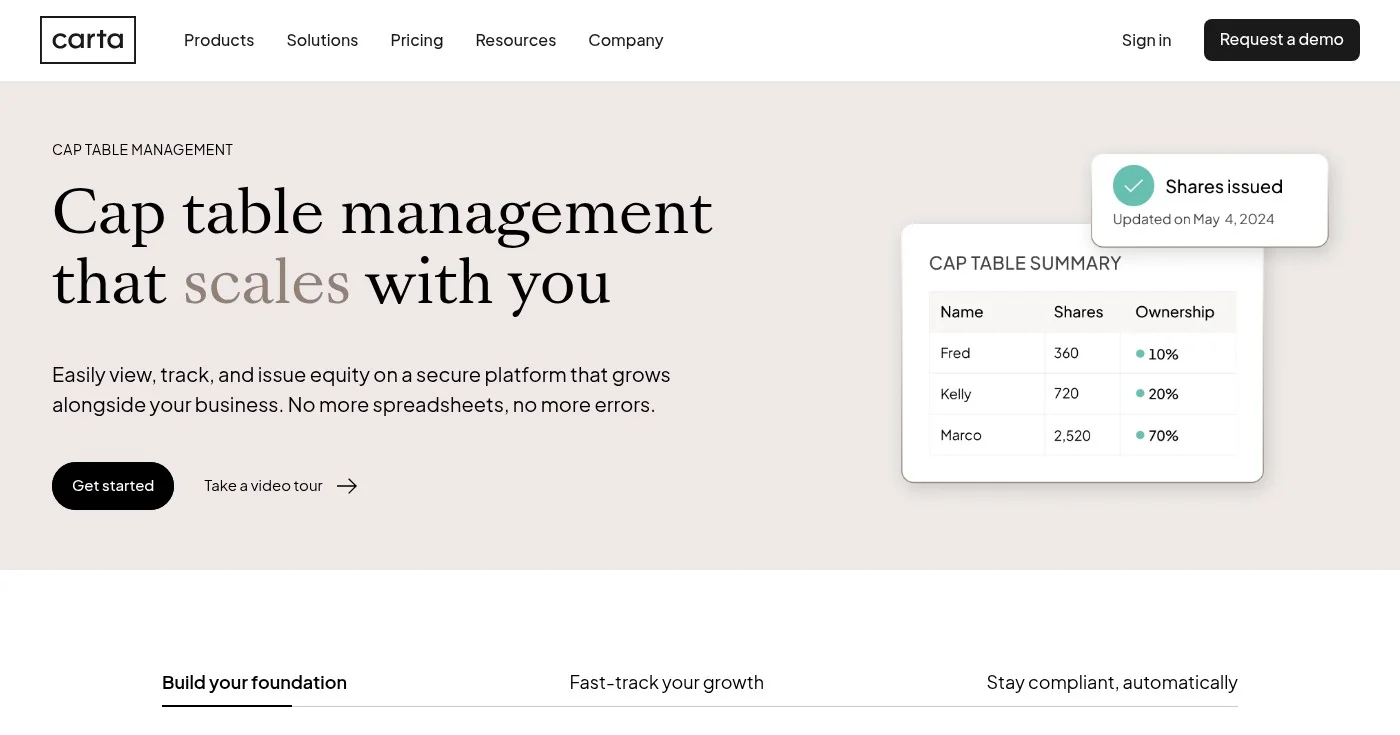
Carta was founded in 2012 by Henry Ward (CEO) and Manu Kumar (Chairman) as eShares, a tool to digitize paper stock certificates. The company rebranded to Carta in 2017 as it expanded from basic cap table tracking into a full equity operating system.
Today, Carta reports managing over $2 trillion in equity for nearly two million people globally. Its customer base spans early-stage startups, growth companies, pre-IPO unicorns, and venture funds. The platform handles everything from issuing your first SAFE to managing ASC 718 compliance before an IPO.
Carta is headquartered in San Francisco and has raised $1.16 billion in total funding. Its peak valuation was around $7.4 billion, though a secondary sale in 2024 reflected a significantly lower implied valuation after the company exited its secondary trading business, CartaX.
Carta does not publish pricing for any plan beyond the free Launch tier. Every paid plan requires a demo request and a custom quote from a sales rep.
This is a deliberate pricing strategy: Carta charges based on stakeholder count, company stage, and which modules you need. The result is that two companies at the same funding stage can pay very different amounts depending on how well they negotiate.
Here's what Vendr's analysis of 679 Carta contracts reveals about real-world costs:
Company Stage | Stakeholders | Typical Annual Cost |
|---|---|---|
Early-stage (seed) | Under 50 | $3,000–$8,000/yr |
Growth-stage (Series A-C) | 100–300 | $10,000–$25,000/yr |
Late-stage (pre-IPO) | 300–500+ | $30,000–$75,000+/yr |
Median across all deals | Any | $14,725/yr |
The average savings from negotiation is 12.85%, which suggests there's meaningful room to negotiate. Multi-year commitments, waived onboarding fees, and annual prepayment are common levers.
For context, Carta's closest competitor Pulley publishes transparent pricing: $1,200/yr for its Startup plan (25 stakeholders) and $3,500/yr for Growth (40 stakeholders). That makes direct comparison difficult, but it's a useful anchor for early-stage budgeting.
The value case for Carta is strongest once you factor in 409A valuation costs. On the Grow plan, 409A valuations are bundled; purchasing one independently from a firm runs $2,000–$5,000. For growth-stage companies that need two or three valuations per year, the math shifts in Carta's favor.
Carta's feature set expands significantly as you move up the plan tiers. The Launch plan (free) is genuinely useful for early-stage companies. The paid plans add layers of compliance and operational tooling that become essential as your cap table grows in complexity.
Launch (free) includes:
Build adds:
Grow adds:
Scale adds:
One notable recent change: Carta Total Compensation (salary and equity benchmarking) is now sold separately from the main equity plans. If you need compensation benchmarking, factor that into your total cost of ownership.
User reviews on G2 (4.5/5) and Capterra (4.3/5) consistently praise Carta's interface for equity management tasks. Founders say viewing vesting schedules, granting options to employees, and tracking ownership stakes is straightforward even for non-finance users.
The Launch free plan is easy to get started with. You need only an email address and your certificate of incorporation. Once you're in, the cap table interface is clean and the SAFE template library (Carta, YC, or custom) removes friction from early fundraising.
Onboarding gets more serious on paid plans. The Build tier and above include white-glove onboarding, which matters when migrating an existing cap table. Historical transaction imports are complex, and Carta's dedicated onboarding team handles the heavy lifting.
The main friction point reported by users is customer support quality on lower plans. Some reviewers note that Carta's shift toward automated and chat-based support has made it harder to get personalized help on complex issues. Paid plan customers with white-glove onboarding report better experiences.
Carta's integrations list includes HRIS systems (BambooHR, Rippling) and payroll providers (Gusto), with SSO available for administrators on the Scale plan. The more consequential advantage is Carta's network effect.
When your law firm, investors, and future acquirers all expect to see a Carta cap table, using a different platform creates friction at every diligence event. As one Solarmente co-founder put it in a Carta case study: "Carta feels like it's the standard. If we were to use another tool, I don't know if investors would be as comfortable with it."
This network effect is Carta's strongest moat. It's also why AngelList Stack stopping development on its legacy cap table product sent many founders directly to Carta rather than a cheaper alternative.
Support is tiered by plan: Launch users get email, chat, and phone support, while Build and above include white-glove onboarding and priority channels. Carta Classroom, the company's educational hub, covers equity fundamentals well for first-time founders.
However, two high-profile incidents in 2024 raised questions about the customer relationship at scale.
In January 2024, Carta's secondary trading arm (CartaX) used client cap table data to cold-call investors about selling shares in Linear, a project management startup, without the company's consent. Linear CEO Karri Saarinen's LinkedIn post went viral, and Henry Ward issued a public apology. CartaX was subsequently shut down.
In December 2024, founders publicly reported that canceling a Carta subscription required a mandatory "cancellation request meeting" with a customer success manager, with available slots scheduled well past renewal dates. Carta described this as a one-time staffing issue.
Neither incident reflects well on Carta's customer experience practices, and founders who are sensitive to vendor lock-in should factor this into their evaluation.
Carta's underlying infrastructure carries SOC 2 compliance and is considered secure for storing sensitive equity data. As an SEC-registered transfer agent, it operates under regulatory oversight that smaller competitors do not.
The CartaX incident in January 2024 was not a data breach in the technical sense, but it was a serious breach of trust. Carta accessed cap table data (shareholder identities, share prices) to fuel its own secondary brokerage business. After the backlash, Carta shut down CartaX entirely and the company appears to have refocused on its core equity management business.
For founders evaluating Carta today, the practical takeaway is: CartaX no longer exists, so the specific conflict of interest from that incident is gone. Review Carta's current data policies and service agreements before signing.
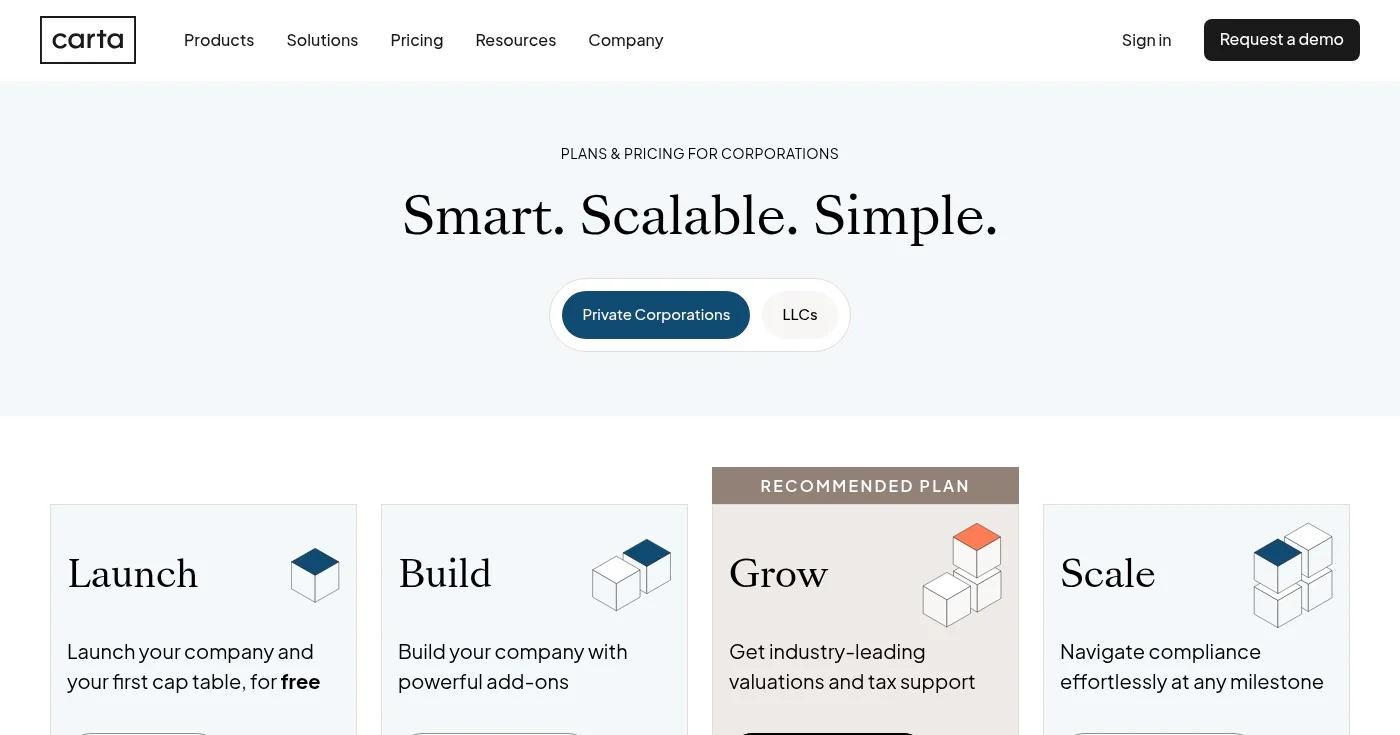
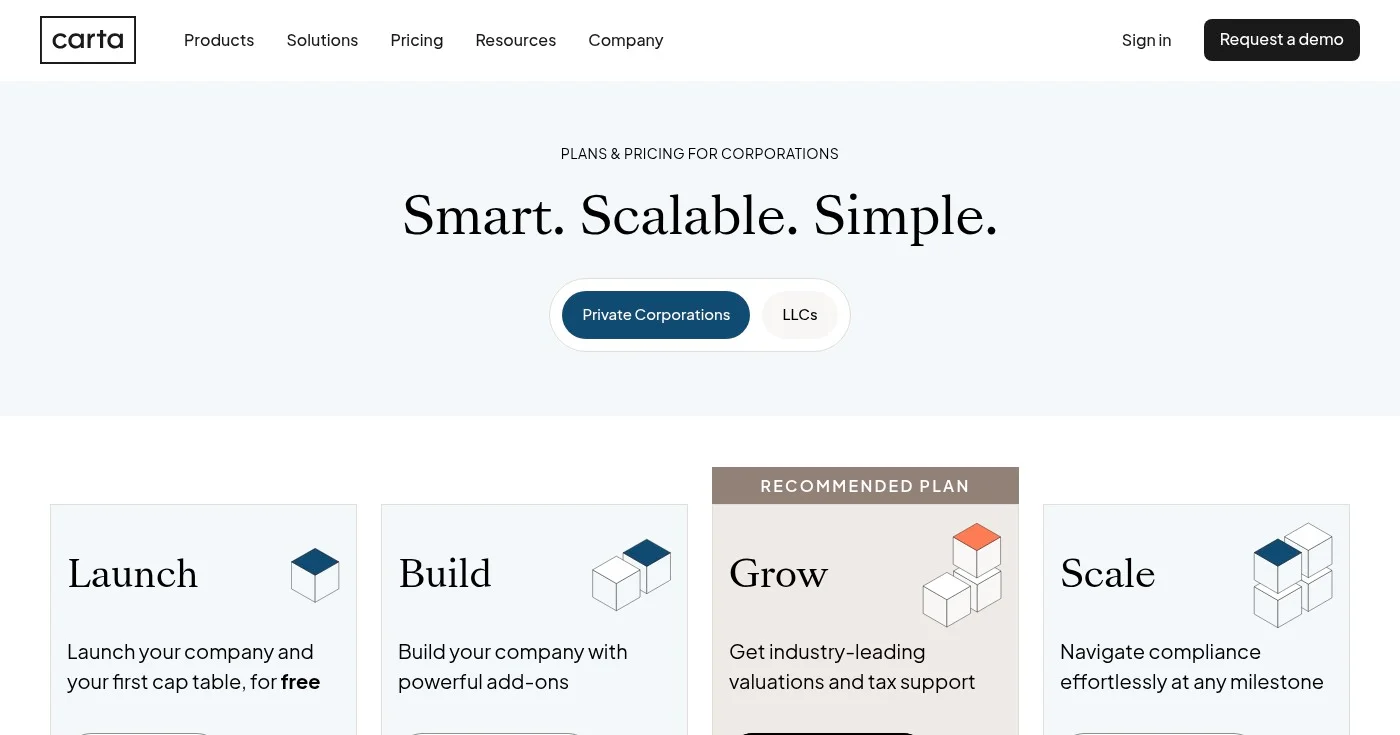
Carta's four plans are designed to scale with your company's equity complexity. Only the Launch tier has published pricing.
Plan | Price | Stakeholders | Best For |
|---|---|---|---|
Launch | Free | Up to 25 (up to $1M raised) | Pre-seed startups issuing first equity |
Build | Custom (demo required) | Up to 50 | Seed-stage companies with priced rounds |
Grow | Custom (demo required) | Flexible | Post-Series A companies needing 409A valuations |
Scale | Custom (demo required) | Flexible | Pre-IPO companies with GAAP/IFRS compliance requirements |
For paid plan pricing, Vendr's Carta buyer guide is the most transparent third-party resource available. Based on 679 deals, early-stage companies pay $3,000–$8,000/yr, growth-stage companies pay $10,000–$25,000/yr, and late-stage companies pay $30,000–$75,000+/yr.
Additional costs to plan for:
The most effective negotiation levers, according to Vendr's data, are annual prepayment, multi-year commitments, and competitive pressure from alternatives like Pulley.
Carta is ideal for:
Carta is NOT ideal for:
If Carta isn't the right fit at your current stage, consider:
Carta is the industry standard for a reason: 50,000+ companies and 85% of unicorns trust it with their equity, and that network effect creates real value when you're navigating fundraising, compliance, and diligence. The free Launch plan is one of the more founder-friendly offers in B2B SaaS, and the paid plans make financial sense once you're past seed stage and need 409A valuations bundled in.
The main argument against Carta is its pricing model: opaque, negotiated, and prone to rate hikes that surprise long-term customers. If predictable SaaS pricing matters to you, Pulley or Eqvista will serve you better at early stages. If you need the investor-trusted platform that law firms and VCs expect to see, Carta is still the benchmark.
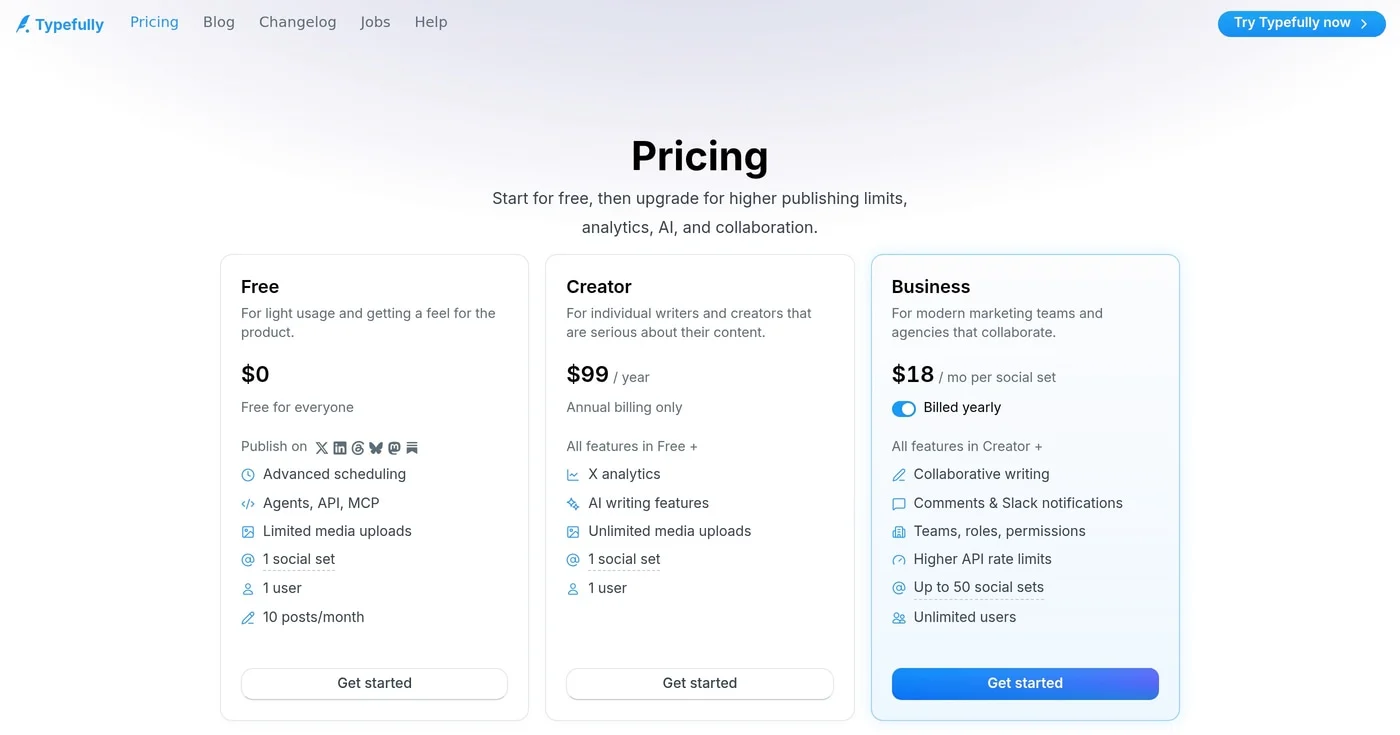
Free is $0, Creator is $99/year, and Business is $18 per set. Typefully pricing still excludes X Premium, LinkedIn analytics, and a monthly Creator bill.
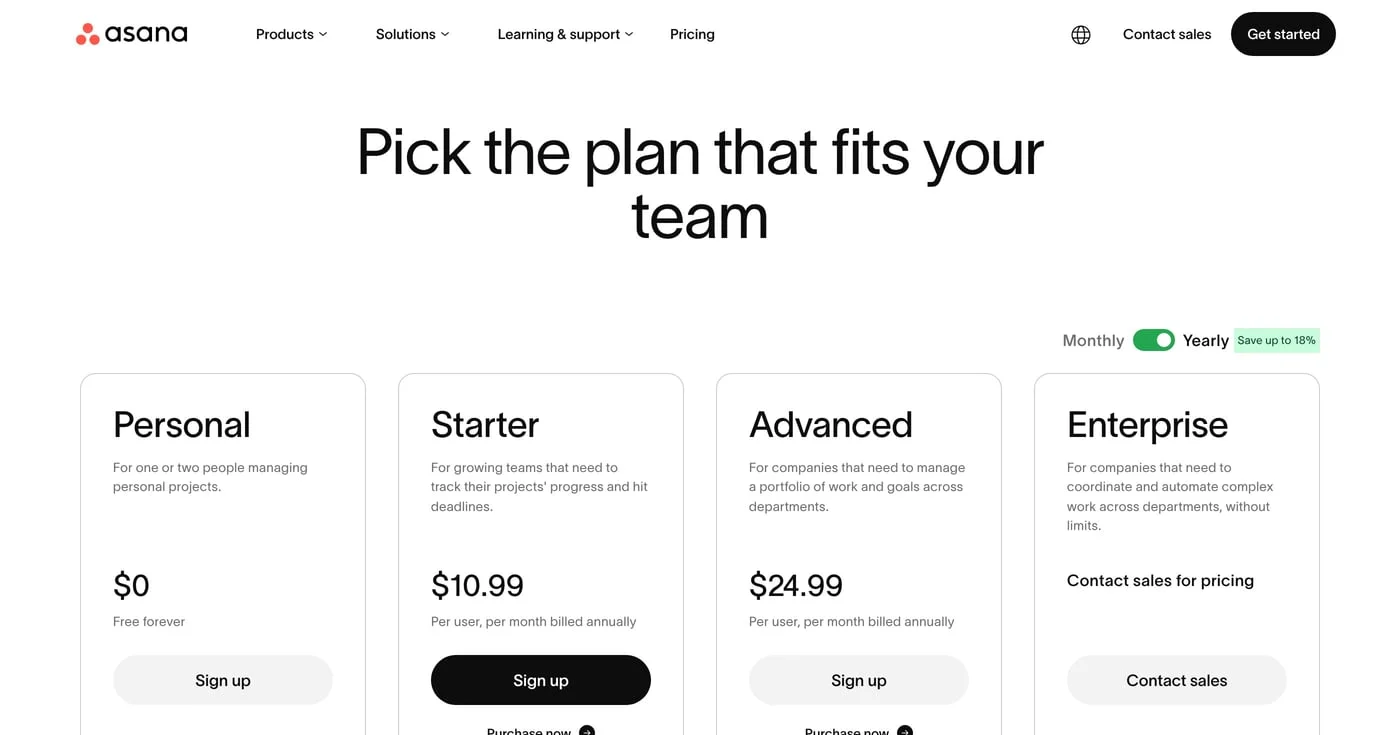
Asana pricing review: Starter is $10.99/user/mo yearly, but paid plans start at 2 seats and 6 people bill as 10. Plans, invoice math, monday.com vs ClickUp.
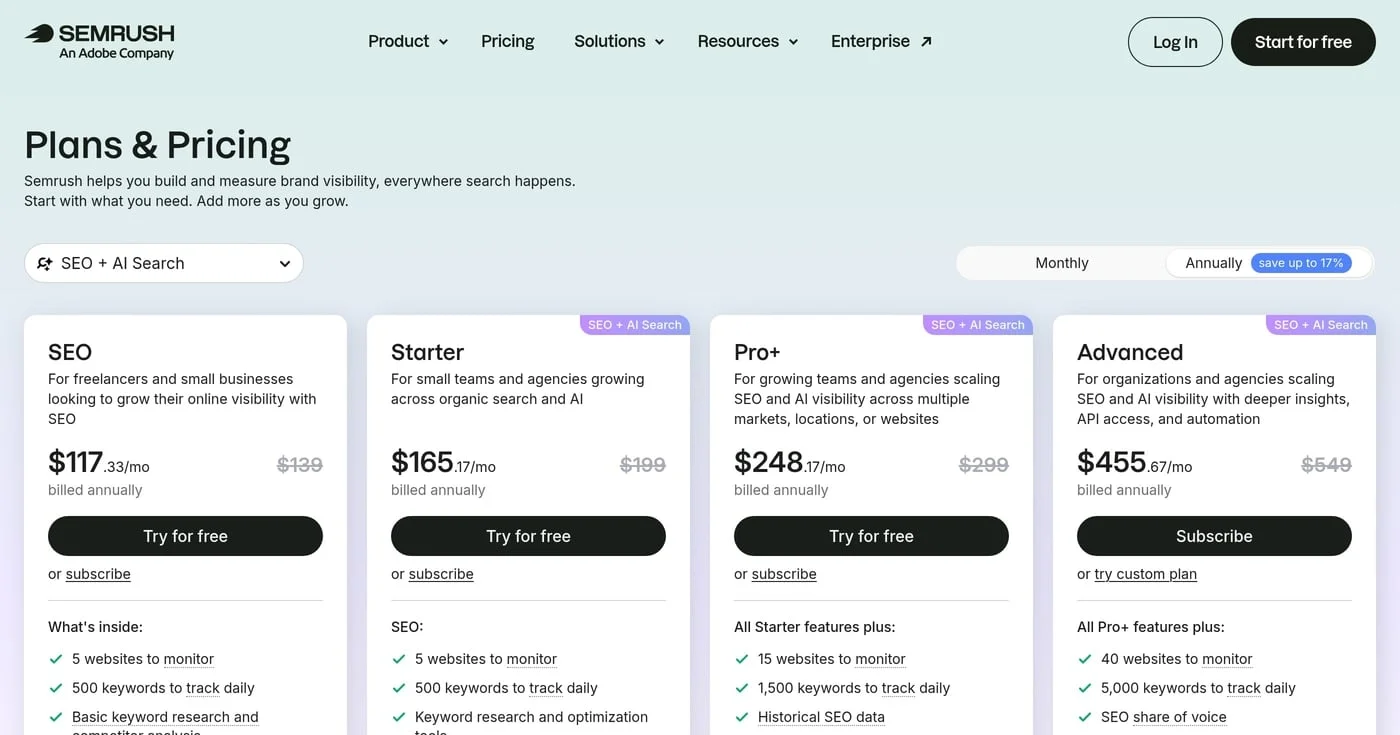
As of September 2026, Semrush SEO is $139/mo and Starter is $199. One seat is included; extra users, $99 AI Visibility, and toolkits set the real invoice.
